English
USD
Apr 30, 2026
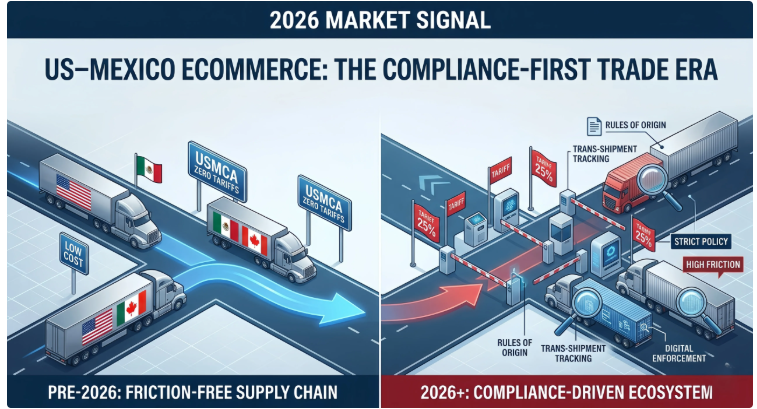
For over two decades, North American ecommerce has been built on the assumption of low-friction, near-zero tariff trade under the USMCA (United States–Mexico–Canada Agreement). But in 2026, that assumption is rapidly eroding.
A new wave of tariff policies, enforcement tightening, and geopolitical trade positioning is transforming the US–Mexico corridor from a "cost-efficient supply chain" into a compliance-driven, policy-sensitive ecosystem.
Recent developments confirm a structural shift:
• The U.S. is maintaining tariffs up to 25% on key sectors like autos, steel, and aluminum, with little expectation of full rollback
• Upcoming USMCA review negotiations (mid-2026) are expected to tighten rules of origin and reduce loopholes
• Policymakers are explicitly targeting transshipment and nearshoring arbitrage through Mexico
• U.S. average effective tariff rates jumped from 2.4% (2024) to ~16.9% (2026)
Translation for ecommerce operators:
This is no longer a logistics game — it's a trade compliance game.
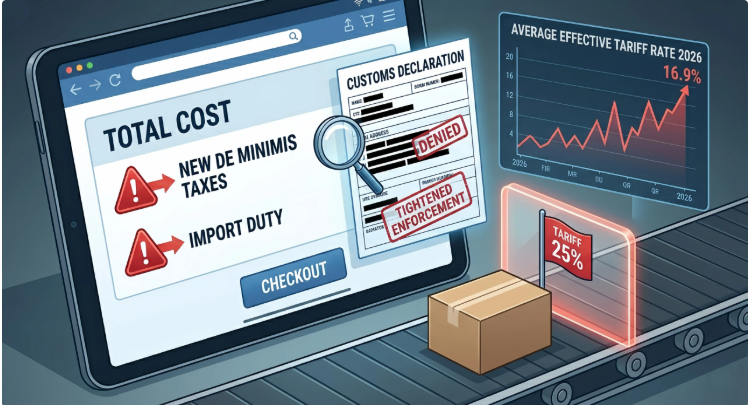
Low-value ecommerce shipments have long relied on simplified customs rules. Now:
• The U.S. is tightening or reconsidering de minimis thresholds
• Customs enforcement is becoming more digital and real-time
• Duty/tax visibility at checkout is becoming essential
Result: Margins shrink, and pricing transparency becomes mandatory.
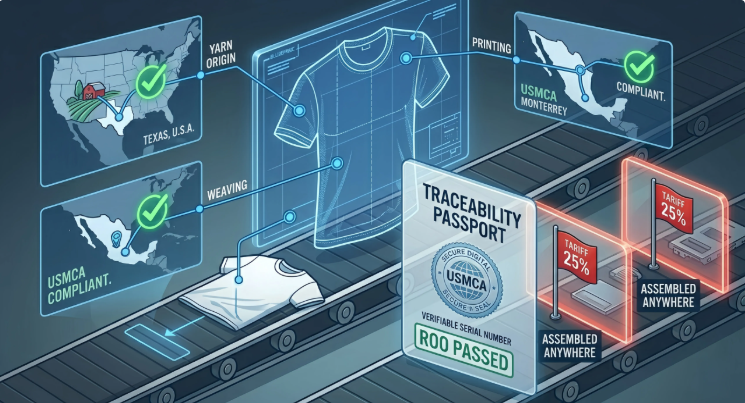
A major 2026 focus is stricter rules of origin (ROO) enforcement.
Why it matters:
• Routing production through Mexico is no longer enough
• Authorities are targeting transshipment (e.g., China → Mexico → U.S.)
Result: Traceable, localized supply chains outperform "assembled anywhere" models.
Tariffs are increasingly used as policy tools, not fixed rates.
• Sector tariffs (up to 25%) remain active
• Policy changes can happen rapidly
• Political pressure (e.g., trade deficits) is rising
Result: Static pricing models break — dynamic pricing becomes critical.
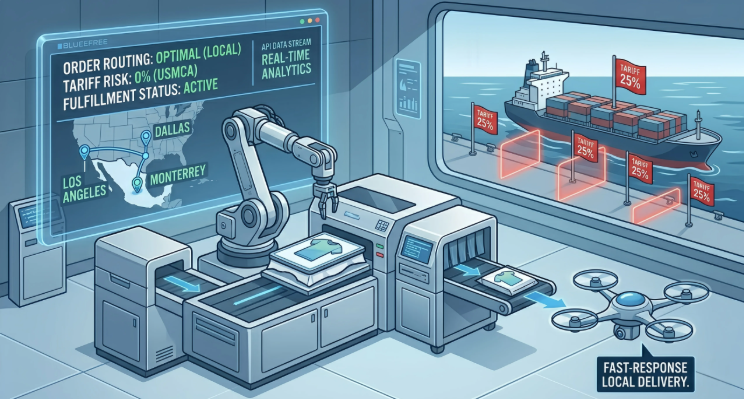
North America isn't de-globalizing — it's re-regionalizing with stricter rules.
• Most trade can still be tariff-free
• But only if compliance requirements are met
New competitive edge:
• Cross-border arbitrage
• Localized, compliant production systems
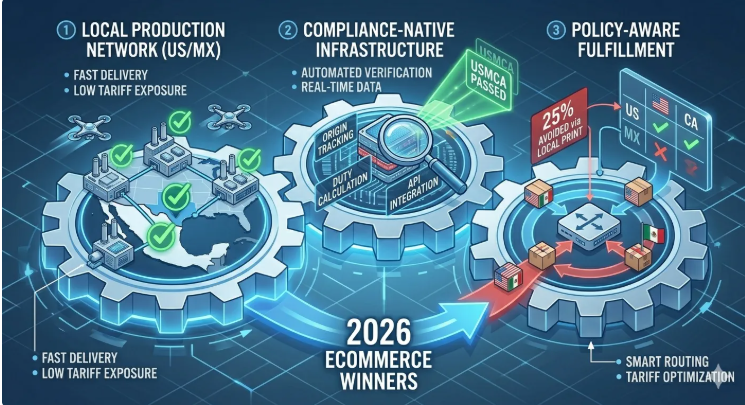
The 2026 winners will build:
1. Local Production (US + Mexico)
Faster delivery, lower tariff exposure
2. Compliance-Native Infrastructure
Origin tracking, duty calculation, API integration
3. Policy-Aware Fulfillment
Smart routing based on tariff rules
The game has changed:
From cost optimization → compliance optimization
From global sourcing → regional systems
For POD platforms, the real advantage is no longer cheap production — but a system that is local, flexible, and policy-resilient.